Apple Cider Vinegar for Blood Sugar: Does It Actually Work?
Short answer: A little — and only a little. Small studies show that apple cider vinegar taken before a meal can modestly blunt the blood sugar spike that follows, probably because its acetic acid slows how fast food leaves the stomach. It is not a treatment, it does not replace medication, and it has real risks that the hype leaves out. Here’s the honest picture.
This article is educational information, not medical advice. If you take diabetes medication, talk to your doctor before adding vinegar to your routine — the interaction risks below are real.
Why People Believe Vinegar Helps Blood Sugar
The claim isn’t new, and it isn’t baseless. Vinegar’s active ingredient, acetic acid, appears to do two useful things around a meal:
- Slows stomach emptying, so carbohydrates arrive in the bloodstream more gradually instead of all at once.
- May slightly improve how muscles take up glucose after eating, based on small short-term studies.
In small trials — usually a few dozen people, often for just a few weeks — a tablespoon or two of vinegar before a starchy meal lowered the post-meal glucose rise by a modest amount in people with insulin resistance or type 2 diabetes. One frequently cited line of research found vinegar before bed was associated with slightly lower fasting glucose the next morning in a very small group.
That’s the whole evidence base: small, short, and about blunting spikes — not about lowering A1C in any proven, durable way. Anyone claiming apple cider vinegar “reverses diabetes” is selling you something.
How People Take It (If Their Doctor Is Fine With It)
The pattern used in most studies, not a prescription:
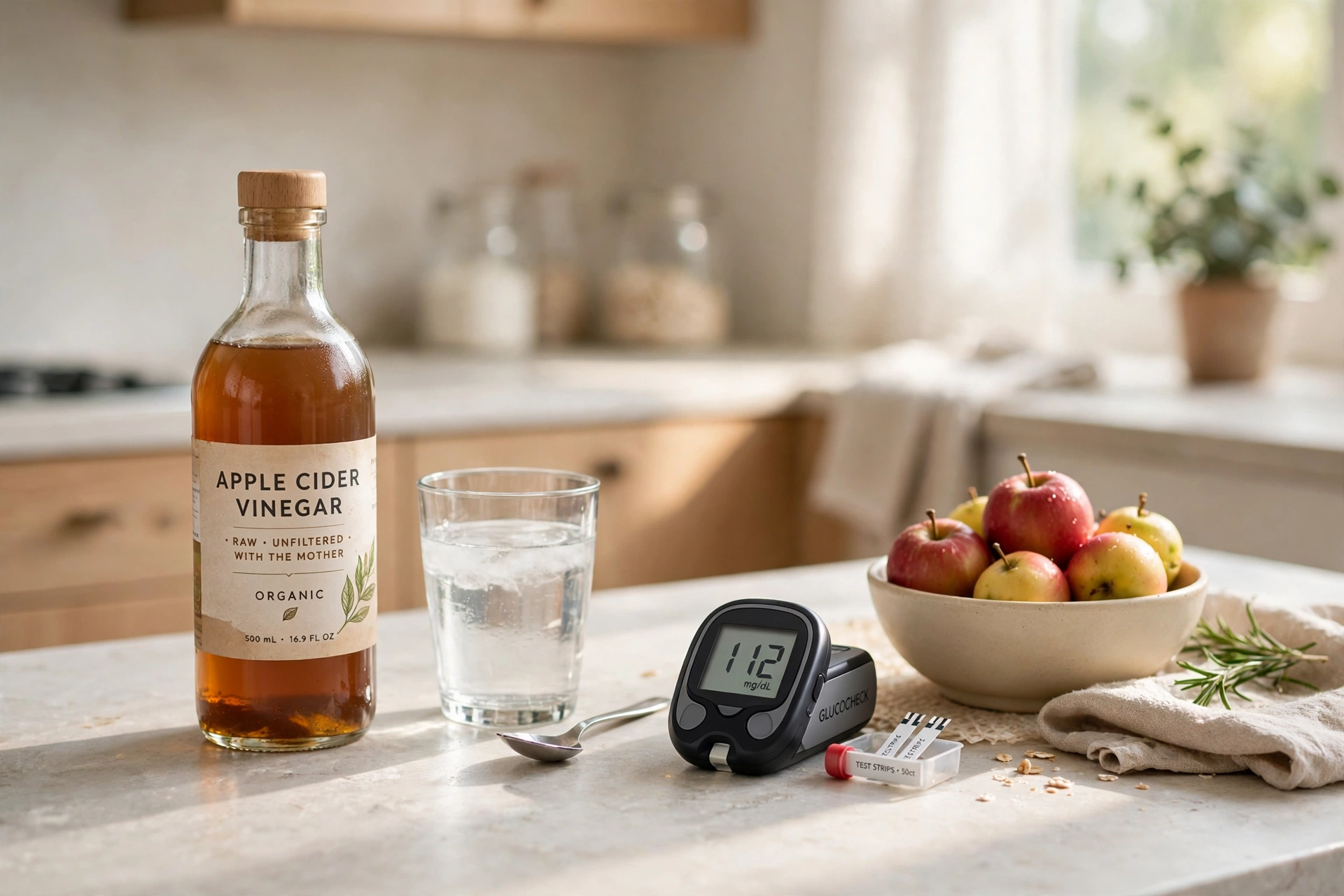
- 1–2 teaspoons up to 1 tablespoon, diluted in a full glass of water — never straight shots.
- Taken just before or with a starchy meal, when there’s a spike worth blunting.
- Some people use it before bed, following the small fasting-glucose study — the weakest-supported use of the three.
If it burns, stop. If you have reflux, a sensitive stomach, or gastroparesis (slow stomach emptying is a known diabetes complication — vinegar can make it worse), this is not for you.
The Risks Nobody Puts on the Label
- Medication interactions. Vinegar can lower potassium and can add to the glucose-lowering effect of insulin and some diabetes medicines — a recipe for a low. Combining it with diuretics or certain heart medicines also deserves a doctor’s eyes. This is the single biggest reason to ask before starting.
- Tooth enamel. Acid is acid. Always dilute it, consider a straw, and rinse with plain water after.
- Blood sugar that falls too far. If you start using it, watch your readings more closely for the first weeks — especially if you also use stronger natural options we cover in our guide to berberine for diabetes.
Where Vinegar Actually Fits in a Real Plan
Think of apple cider vinegar as a minor supporting habit, in the same family as taking a walk after dinner or eating vegetables before the starch. The heavy lifters for A1C are unglamorous and proven: your overall eating pattern, movement, sleep, medication as prescribed, and time. Our guide to how to lower A1C naturally lays those out in order of impact — vinegar would sit near the bottom of that list, as an optional extra.
Curious how it compares with the other kitchen-and-supplement options people ask about? We reviewed the evidence for the main ones in best natural supplements for type 2 diabetes, and its closest kitchen cousin gets the same honest treatment in our article on cinnamon for blood sugar.
The Verdict
Does apple cider vinegar work for blood sugar? Modestly, around meals, for some people, in the short term — that’s the most the evidence allows anyone to say. It’s cheap and low-risk for people whose doctor has checked the interactions, and it is absolutely not a substitute for medication or for the habits that actually move A1C. Try it with your eyes open and your meter handy, or skip it without regret — either way, your results will come from the bigger levers.
Quick FAQs
How much apple cider vinegar for blood sugar? Studies typically used about 1–2 tablespoons a day total, always diluted in water, split around meals. More is not better — more is just more acid.
When is the best time to take it? Just before or with a carb-heavy meal is the use with the best (still small) support.
Can I take it with metformin or insulin? Only your doctor or pharmacist can answer that for your prescription list. Ask first — this is the interaction that matters.