
Best Natural Blood Sugar Supplements: What the Science Actually Says
This article contains affiliate links. If you buy through them, I may earn a commission at no extra cost to you.
If you have Type 2 diabetes or prediabetes, you have probably noticed just how much conflicting advice is out there about supplements. Some sources say they are useless. Others promise they can replace medication entirely. The truth sits in the middle — and it matters, because your health decisions deserve real answers, not hype.
The good news is that several natural supplements do have genuine clinical research behind them. Not one of them is a miracle cure, and none should replace medication or medical supervision. But when used alongside a healthy diet and regular activity, certain ingredients have shown real, measurable effects on blood sugar and A1C levels in actual clinical trials.
This guide walks through the natural supplements with the strongest evidence behind them, what the research actually shows, and how to think about adding targeted support to your routine.
Fiber is one of those well-studied options too: our review of psyllium for blood sugar looks at what 19 trials found, including the medication-timing rule to follow.
1. Berberine
Berberine is one of the most researched natural compounds for blood sugar management, and the results are genuinely impressive. In one clinical study, adults with newly diagnosed Type 2 diabetes who took berberine saw their A1C drop from 9.5% to 7.5% over three months — a reduction comparable to metformin, one of the most commonly prescribed diabetes medications.
Most research uses doses between 0.9 and 2.4 grams per day, split into two or three smaller doses. Berberine appears to work even better when combined with metformin rather than as a replacement for it, so if you take diabetes medication, talk to your doctor before adding berberine to your routine, since it can intensify the blood-sugar-lowering effect.
On A1C specifically: trials have shown meaningful reductions with consistent use over 8–12 weeks — see our full berberine dosage and safety guide. For timing, see our guide to the best time to take berberine.
2. Cinnamon
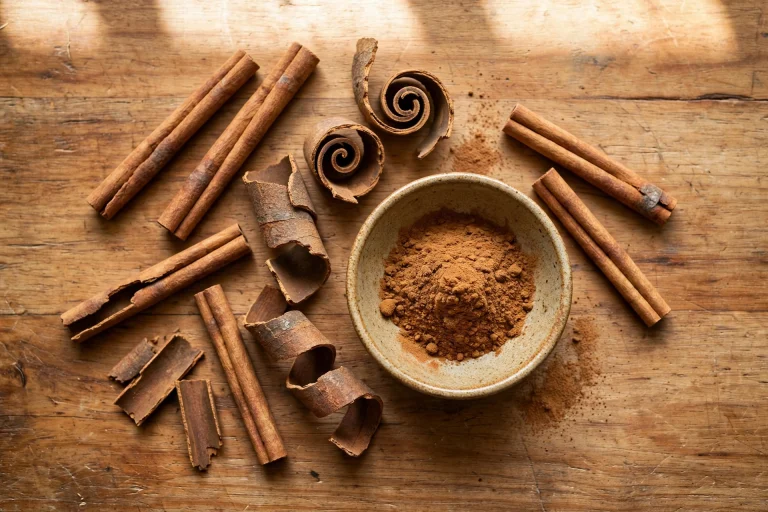
Cinnamon is more than a kitchen spice — clinical research shows it can meaningfully lower fasting blood sugar in people with Type 2 diabetes. A comprehensive meta-analysis of multiple studies confirmed cinnamon supplementation reduces fasting glucose levels, and one randomized trial combining cinnamon with berberine showed reductions in fasting blood sugar, A1C, and LDL cholesterol after just 12 weeks.
Ceylon cinnamon is generally preferred over the more common Cassia variety, since Cassia contains higher levels of coumarin, a compound that can affect liver health at high doses over time.
On A1C: smaller trials suggest modest reductions, though the effect size is less consistent than berberine’s. Another kitchen item people often ask about is apple cider vinegar for blood sugar, which we look at separately.
3. Chromium
Chromium is a trace mineral involved in how your body uses insulin. The research here is genuinely mixed — some studies show modest improvements in glucose metabolism, while others show little effect compared to placebo. Chromium appears most useful for people who have an actual chromium deficiency, so it may not move the needle much if your levels are already sufficient.
Clinical studies typically use chromium picolinate starting around 200 mcg per day.
4. Magnesium
Magnesium plays a direct role in insulin sensitivity, and low magnesium levels are common in people with Type 2 diabetes. Large studies involving more than a million participants found that adequate dietary magnesium is associated with a meaningfully lower risk of developing Type 2 diabetes in the first place.
If you already eat plenty of leafy greens, nuts, and whole grains, you may be getting enough magnesium through food. Supplementation is generally most beneficial for people who are deficient.
For the full research breakdown, doses and the kidney warning, see our guide to magnesium for blood sugar.
5. Alpha Lipoic Acid
Alpha lipoic acid is a powerful antioxidant most often studied for its effects on diabetic nerve pain (neuropathy) rather than blood sugar itself. The evidence on nerve pain is mixed but generally positive, while its direct effect on blood sugar and cholesterol has not consistently outperformed placebo in larger studies.
This one is worth discussing with your doctor specifically if nerve pain or tingling is a concern alongside your blood sugar management.
Frequently Asked Questions
Do blood sugar supplements actually work?
Some do, modestly, in trials. Berberine and cinnamon have the strongest research signals for blood sugar support; chromium and magnesium have thinner but real data. None of them replace medication, and effects typically build over weeks of consistent use — not days.
Which natural supplement lowers A1C the most?
Berberine has the most A1C-specific trial data, showing meaningful reductions with consistent use. Cinnamon comes next, with smaller effects. But “most” is relative: these are modest reductions compared to prescription medication, and anyone on diabetes drugs should talk to their doctor before adding supplements.
Should I take individual ingredients or a combination formula?
It depends on how many fronts you want to cover. Single ingredients let you control the dose and isolate effects; combination formulas trade that control for convenience. If diet and exercise alone aren’t moving your numbers, read when extra support makes sense.
Why a Combination Formula Can Make Sense
Reading through the research, one pattern becomes clear: no single ingredient is a magic bullet, but several ingredients each address blood sugar regulation from a different angle — insulin sensitivity, glucose absorption, and metabolic support. This is exactly why combination formulas exist: rather than buying five separate bottles and guessing at doses, a well-formulated blood sugar support supplement combines several of these evidence-backed ingredients into one daily routine.
The supplement we mention on this page, with the numbers up front
The one supplement we link to on this page is Gluco6 — a daily capsule formula made to support healthy blood sugar alongside food and lifestyle changes. It is not a cure, it does not treat or reverse diabetes, and it does not replace any medication your doctor has prescribed. The habits in this article do the heavy lifting; a supplement is only support.
What it costs (official page, checked Nov 19, 2026): 2 bottles — a 60-day supply — are $69 a bottle, $138 total. 3 bottles — a 90-day supply — are $49 a bottle, $147 total. 6 bottles — a 180-day supply — are $39 a bottle, $234 total. The 3- and 6-bottle orders ship free, and every order is a one-time payment — no subscription. Prices can change; the figure on the official page when you order is the one that counts.
It comes with a 60-day money-back guarantee. If it does nothing for you, you can ask for your money back inside 60 days.
Skip it if you take blood-sugar medication and have not talked to your doctor first — a blood-sugar supplement on top of medication can push blood sugar too low. Skip it if you are pregnant, breastfeeding, or under 18.
See Gluco6 on the official page — current price and the 60-day guarantee here
Who Gluco6 suits — and who should skip it
It suits adults with type 2 diabetes or prediabetes who already manage food and movement and want extra support alongside their doctor’s plan.
Skip it if you are expecting it to replace medication, if you are pregnant or nursing, or if your doctor says no.
Honest pros and cons
Pros: Clear bundle pricing, and bigger bundles lower the per-bottle cost; a 60-day money-back guarantee; a simple daily routine.
Cons: Not cheap; it is a supplement, not a medicine, and does not replace prescribed treatment; results vary; talk to your doctor first, especially if you take diabetes medication.
The Bottom Line
Natural supplements are not a replacement for prescribed diabetes medication, and you should never adjust your treatment plan without your doctor’s guidance. But the research is clear that certain ingredients — particularly berberine and cinnamon — have real, measurable effects on blood sugar when used consistently alongside a healthy diet and active lifestyle. Talk to your healthcare provider before starting any new supplement, especially if you currently take medication for diabetes, blood pressure, or blood thinning.
We only recommend products we believe provide genuine value. This content is for informational purposes only and is not medical advice. Always consult your healthcare provider before making changes to your diabetes management.
4 Comments