Psyllium for Blood Sugar: What the Research Actually Shows
Psyllium is one of the most common fiber supplements in the world. You have probably seen it on a pharmacy shelf, sold for digestion and regularity. But in recent years, researchers have been asking a different question: can psyllium for blood sugar control actually make a difference for people with diabetes?
The honest answer is yes — a modest one. Psyllium is not a cure. It will not replace your medication, your food, or your daily walks. But the research behind it is stronger than what backs most supplements, and the effect, while small, is real.
This article walks through what psyllium is, how it works, what the studies found, and — just as important — how to take it safely. One safety rule in particular matters a lot if you take diabetes medication, so please read the safety section before you try it.
What Is Psyllium?
Psyllium is a fiber from the husks of the seeds of a plant called Plantago ovata. The husks are ground into a powder — the main ingredient in common fiber products, including Metamucil-type supplements sold at any drugstore.
Psyllium is a soluble fiber. That word matters. There are two main kinds of fiber:
- Insoluble fiber does not dissolve in water. It adds bulk and helps food move through your gut.
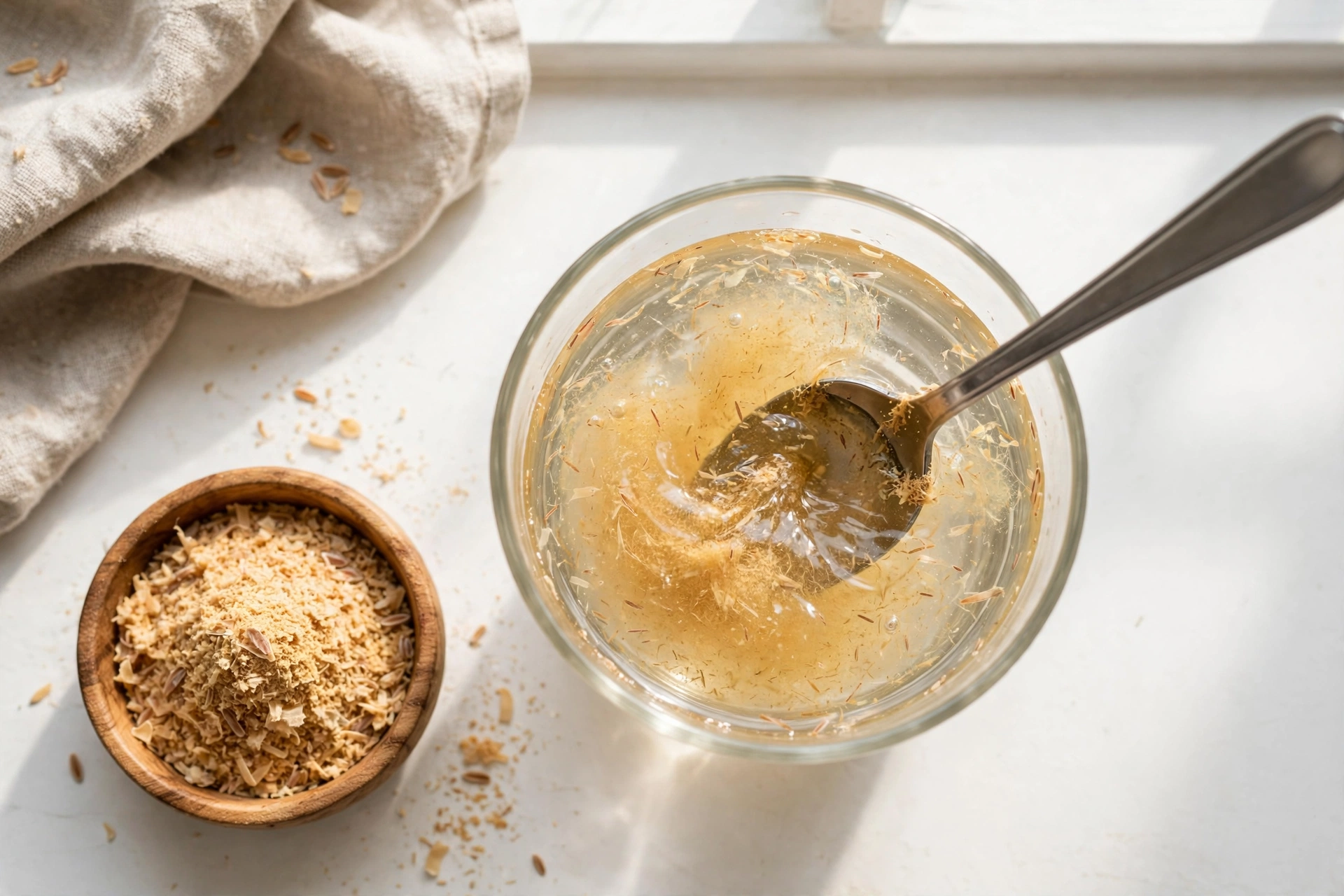
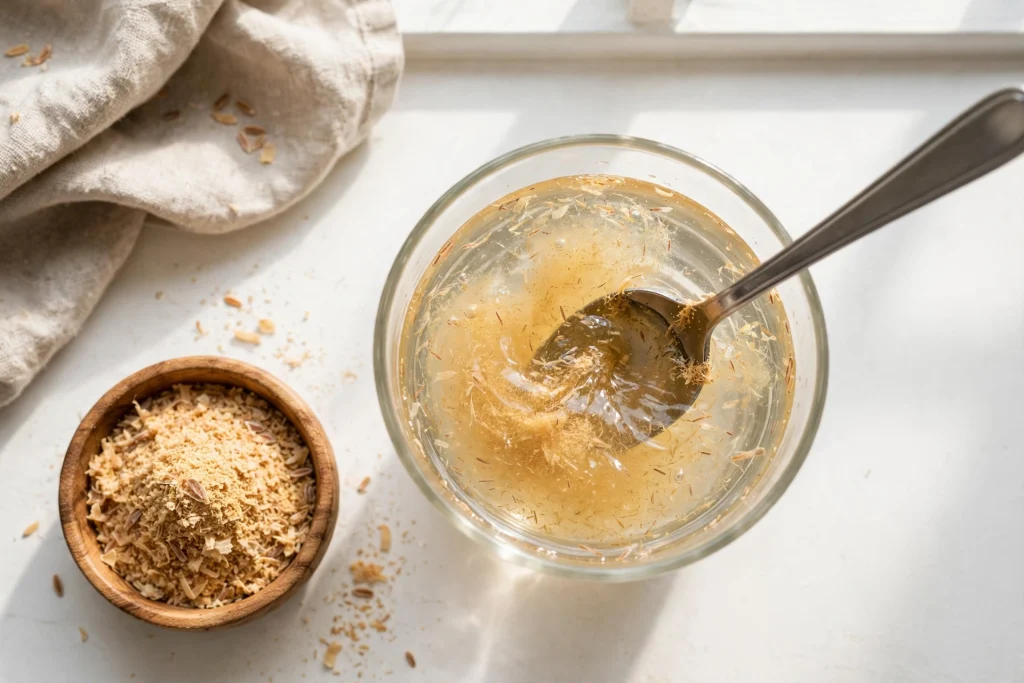
- Soluble fiber dissolves in water and forms a thick gel. Psyllium is one of the best gel-formers there is — stir it into a glass of water and you can watch it thicken within a minute or two.
That gel is the whole story. Psyllium is not absorbed into your bloodstream; it passes through you. What it changes is how fast the food eaten with it gets digested — and that is where the blood sugar benefit comes from.
How Psyllium Helps Blood Sugar
When you eat a meal with carbohydrates — bread, rice, pasta, fruit — your body breaks those carbs down into glucose. The glucose moves into your blood, and your blood sugar rises. The faster the carbs are absorbed, the faster and higher the spike.
Here is what psyllium does, step by step:
- You take psyllium with water before or with a meal.
- In your stomach, it forms a thick gel and mixes with the food.
- The gel slows the food down. Stomach emptying becomes slower and steadier.
- In the intestines, the gel acts like a gentle barrier. The carbohydrates are broken down and absorbed more slowly.
- Because glucose enters your blood more slowly, the rise after the meal is smaller and gentler. Your body gets more time to handle it.
In plain words: psyllium does not remove sugar from your food. It slows the sugar down. Instead of a fast flood of glucose, you get a slower stream — and a slower stream is far easier for your body and your insulin to manage.
That same gel also explains why psyllium helps with regularity and fullness. But for blood sugar, this slowing effect is the key — and it is the one researchers have tested in study after study.
What the Research Actually Shows
A lot of supplements are sold on one small study or pure hope. Psyllium is different: it has been tested in many proper clinical trials, and in 2024 researchers pulled the results together in one large review.
The 2024 review of 19 trials
This review — a meta-analysis, which means a study of studies — combined 19 randomized controlled trials involving 962 people. In these trials, people are split by chance into a group that takes the supplement and a group that takes a look-alike placebo — the strongest kind of nutrition research there is.
The review was also GRADE-assessed. GRADE is a system scientists use to rate how trustworthy a body of evidence is — a quality check on the research itself.
Here is what the pooled results showed:
- Fasting blood glucose dropped by about 7 mg/dL on average.
- HbA1c dropped by about 0.75 points on average. HbA1c is the test that shows your average blood sugar over roughly the past three months, so a drop here means the benefit lasted beyond a single meal.
Who got the strongest results?
The strongest effects showed up in people who:
- Had type 2 diabetes that was being treated — in other words, people already managing their condition, using psyllium as an addition, not a replacement.
- Took at least 10 grams per day.
- Took their psyllium before meals, so the gel was in place when the food arrived.
That pattern makes sense with how psyllium works: it has to be in your stomach ahead of the food to slow the food down, and a tiny sprinkle once in a while is not enough gel to matter.
An honest read of the numbers
Let’s keep these numbers in perspective, because hype helps nobody.
A fasting glucose drop of about 7 mg/dL is modest. An HbA1c drop of about 0.75 points is meaningful but not dramatic — smaller than what most diabetes medications deliver. Psyllium is a helper. It works best as one part of a bigger plan: sensible food, regular movement like walking after meals for blood sugar control, your prescribed medication, and steady habits — the same basics that matter in any plan to lower your A1C naturally.
What the research does not show: that psyllium cures diabetes, that it works for everyone, or that anyone should stop or reduce medication because of it. If your numbers improve and you wonder about changing a dose, that is a conversation for your doctor — only your doctor.
How to Take Psyllium for Blood Sugar
If you decide to try it, how you take it matters almost as much as whether you take it. Here is the simple, safe way:
Start low, build up slowly
Do not start at the full dose. Fiber added too fast is the main cause of the gas and bloating people complain about. A gentle ramp looks like this:
- Days 1–4: about 1 teaspoon (roughly 3 grams) once a day, in a full glass of water.
- Week 2: 1 teaspoon twice a day, before your two biggest meals.
- After that: build toward roughly 10 grams a day — often about 2 teaspoons twice a day, or as the label directs — split across meals.
Give your gut a few days at each step; most people’s systems adjust within a week or two.
Timing: before meals
For blood sugar, timing is the point. Take your psyllium shortly before a meal — roughly 15 to 30 minutes ahead works well for many people, or right at the start of the meal. The gel needs to be in your stomach when the food arrives so it can slow digestion down. Taking it hours after eating misses the main benefit.
Always with a full glass of water
This is not a suggestion — it is a safety rule. Always mix psyllium in a full glass of water (about 8 ounces / 240 ml) and drink it right away, before it thickens in the glass. Then drink a little more water after.
Psyllium absorbs many times its weight in water. If it goes down without enough liquid, it can swell in your throat or esophagus and cause choking or a blockage. Never take dry psyllium powder by the spoonful.
Picking a product
Plain psyllium husk powder is the simplest choice. Some flavored products are sweetened with sugar — the last thing you want in a blood sugar routine — so if you buy a flavored version, check the label and choose a sugar-free one.
And remember: psyllium works alongside food, not instead of it. The meals themselves matter most — building plates around the best foods for controlling blood sugar will do more for you than any supplement alone.
Side Effects: What to Expect
Psyllium is generally considered safe, and serious problems are rare when taken correctly with water. The common, mild effects show up mostly in the first days:
- Gas and bloating. The most common complaint. Your gut bacteria ferment some of the fiber, and gas is the result. It usually settles as your body adjusts, especially if you start low and build slowly.
- A feeling of fullness. The gel takes up space. Many people count this as a plus.
- Mild stomach cramping in the first days for some people.
- Looser stools, or occasionally the opposite if you are not drinking enough water. Water is the fix in most cases.
If side effects are strong, the usual answer is simple: drop back to a smaller dose, hold there longer, and make sure your water intake is truly a full glass with every dose. If problems persist, stop and talk to your doctor.
Safety: Medication Timing and Other Warnings
This is the most important section. Psyllium is only a fiber, but it interacts with your body in ways that matter if you take medication — and most people with type 2 diabetes do.
Keep psyllium and oral medications about 2 hours apart
Because psyllium forms a gel and slows things moving through your gut, it can also slow down or reduce how much of a pill gets absorbed. That applies to diabetes tablets and other oral medications too.
The standard, safe rule is:
Take your oral medications at least 2 hours before or 2 hours after taking psyllium.
Do not guess with this. If your medication schedule is tight — say, a tablet that must be taken with a specific meal — talk to your doctor or pharmacist before starting psyllium, and plan your doses together. A pharmacist can usually lay out a daily timetable with you in a few minutes.
Talk to your doctor before adding psyllium if you take any daily medication, and never change a medication dose on your own because a supplement seems to be helping. If your readings improve, bring that good news to your next appointment — checking at consistent times helps you see the trend clearly, as our guide to the best time to check blood sugar explains.
Never take it dry — choking and blockage warning
Psyllium swells fast when it meets liquid. Taken dry, or with too little water, it can swell in the throat and cause choking, or form a blockage in the esophagus or intestines. This risk is completely avoidable:
- Always stir it into a full glass of water.
- Drink it promptly, while it is still liquid enough to swallow easily.
- Do not take psyllium at all if you have trouble swallowing, a narrowed esophagus, or a known bowel blockage or narrowing — unless your doctor has specifically said you can.
Who should talk to a doctor first
Check with your doctor before starting psyllium if you:
- Take any daily oral medication, especially diabetes tablets, thyroid medication, or heart medication.
- Have a history of swallowing problems, bowel obstruction, or intestinal narrowing.
- Have kidney disease or are on a fluid-restricted plan (the extra water with each dose matters here).
- Are pregnant or breastfeeding.
- Notice your blood sugar readings dropping lower than usual after starting — your medication plan may need a doctor’s review.
For most healthy adults, psyllium with water, spaced away from pills, is a low-risk addition. But “natural” does not mean “no rules” — these few rules are what keep it low-risk.
Frequently Asked Questions
How long does psyllium take to affect blood sugar?
The slowing effect happens right away — the first dose before a meal already slows that meal’s glucose rise. But improvements like the HbA1c drop were measured over weeks of daily use, and HbA1c itself reflects about three months. Judge psyllium by your readings over time, not one single test.
How much psyllium should I take per day for blood sugar?
In the research, the strongest results came at 10 grams or more per day, split before meals. Start much lower — about a teaspoon a day — and build up over one to two weeks so your gut can adjust. Follow the product label, and if you take medication, settle the timing with your doctor or pharmacist first.
Can I take psyllium with metformin?
Many people do — but not at the same moment. Psyllium’s gel can reduce how much of a tablet is absorbed, so keep about 2 hours between your psyllium and any oral medication, including metformin. Confirm your personal timing with your doctor or pharmacist before you start.
Is psyllium better than other fiber supplements?
Psyllium is one of the most studied fibers for blood sugar, and its gel-forming strength is unusually high. Other fibers have their own benefits, but few have the same depth of research behind them for glucose control. Whatever fiber you choose, it supports — never replaces — food, movement, and medication.
Can psyllium replace my diabetes medication?
No. The research shows modest improvements when psyllium is added to regular care, including in people whose diabetes was already being treated. It is a helper, not a substitute. Never stop, skip, or reduce a prescribed medication because of a supplement. If your numbers improve, bring them to your doctor, who decides about any changes.
The Bottom Line
Psyllium for blood sugar is one of the rare supplement topics where the research is solid: 19 randomized trials, 962 people, and a quality-checked review showing fasting glucose down about 7 mg/dL and HbA1c down about 0.75 points. Those are modest numbers — a real nudge, not a transformation.
Used the right way, it is a simple daily habit: a spoonful of fiber in a full glass of water, before meals, built up slowly, and always kept about 2 hours away from your pills. Used the wrong way — dry, rushed, or tangled up with your medication schedule — it can cause real problems.
Keep it in its proper place: one helpful layer on top of the foundations that matter most — your food, your movement, your medication, and regular checks with your care team. Small, steady helps, stacked together, are how blood sugar improves.