
How to Lower Your A1C Naturally — 10 Proven Methods

This article contains affiliate links. If you buy through them, I may earn a commission at no extra cost to you.
Your A1C is a 2-3 month average of your blood sugar — which means it moves slowly, in the right direction, when the underlying habits change. There is no 7-day fix, and anyone promising one is selling something. What follows are ten methods with real evidence behind them, roughly ordered by impact — plus honest timelines, because A1C is measured in months, not days.
A note on the word “proven”: here it means evidence-backed — supported by clinical trials, large prevention studies like the Diabetes Prevention Program, or well-understood physiology. It does not mean guaranteed. Bodies differ, and what works fastest for one person may take longer for another. This article is for informational purposes only and is not medical advice; discuss any changes with your doctor.
Cut Refined Carbs and Sugary Drinks
For most people with a high A1C, the single biggest lever is cutting back on refined carbohydrates and sugary drinks. Your A1C reflects your average blood sugar, and the fastest way to raise that average is repeated post-meal spikes — the sharp rises that follow easily digested carbs.
The worst offenders are liquid sugar: soda, sweetened juice, and energy drinks. With nothing to slow digestion, they hit the bloodstream fast. Next come refined starches — white bread, pastries, white rice, sugary cereals. This is not about starving yourself or swearing off carbs forever; it is about swaps. Water or unsweetened tea instead of soda, whole fruit instead of juice, intact whole grains instead of refined ones.
Why start here? Removing a single daily sugary drink can cut dozens of grams of sugar from your day — a change that shows up in post-meal readings within days and in your A1C within months. Liquid sugar is the worst offender, so it is also the highest-value cut.
Walk After Meals
Ten to fifteen minutes of easy walking after eating is among the most underused free tools in blood sugar management. Studies on post-meal walking consistently show it blunts the glucose spike that follows a meal — often more effectively than a longer walk taken at an unrelated time of day.
The mechanism is simple: contracting muscles pull glucose out of the bloodstream to fuel the work, with no extra insulin required. Think of your muscles as a sponge that soaks up sugar while they move.
That is why “after meals” beats “sometime today.” Timing the walk to the post-meal window puts your muscles to work exactly when glucose is flooding in. Three short walks — one after each main meal — can add up to 30–45 minutes of gentle activity without ever setting foot in a gym.
Build Muscle With Resistance Training
Muscle is a glucose sink. The more muscle you have — and the more often you challenge it — the more capacity your body has to clear sugar from the blood. That effect works independently of weight loss: studies link resistance training to better insulin sensitivity and lower A1C even in people whose weight does not change.
Two to three sessions a week is enough to matter, and bodyweight counts: push-ups, squats, lunges, resistance bands. You do not need a gym membership or heavy barbells to start.
Cardio is great, but muscle-building is the overlooked partner. If you only add one new workout habit, make it resistance training on non-consecutive days, paired with the post-meal walks from method 2.
Fix Your Sleep
Poor sleep raises cortisol and worsens insulin resistance — and a single bad night can measurably worsen next-day glucose control. The chain is straightforward: too little sleep stresses the body, cortisol rises, and cortisol tells the liver to release more glucose while making cells less responsive to insulin.
Aim for 7–9 hours. Consistency matters as much as duration: regular bedtimes, a dark cool room, and no screens in the last hour before bed help more than any gadget. People who fix chronic short sleep often see their fasting readings improve first.
Overnight glucose has its own quirks, too — if your mornings run high despite decent daytime numbers, read about why blood sugar rises overnight and what to do about it.
Manage Chronic Stress
Chronic stress runs on the same cortisol pathway as poor sleep: when stress hormones stay elevated, the liver keeps releasing glucose and insulin has to work harder. Day after day, that keeps your average — your A1C — elevated, even when your diet has not changed.
The fixes are unglamorous but evidence-based: daily walking, slow breathing exercises, and protecting your sleep. Methods 2 and 4 pull double duty here. No miracle framing is needed — small, repeated down-regulation of the stress response adds up over weeks and months.
The stress–glucose connection is stronger than most people realize; see how stress can raise blood sugar and what the research says about calming it down.
Lose 5–10% of Body Weight (If Overweight)
If you carry extra weight, losing just 5–10% of your body weight can have an outsized effect on A1C. The landmark Diabetes Prevention Program found that people with prediabetes who lost a modest amount of weight through diet and activity changes cut their risk of progressing to type 2 diabetes dramatically.
Modest beats dramatic for one reason: sustainability. Crash diets can lower blood sugar fast and rebound faster. A slow, steady loss you can maintain for years keeps A1C down for years.
No diet brand is required — and be wary of anyone selling you one as the “secret.” What matters is an eating pattern you can live with: more whole foods, fewer refined carbs (see method 1), and the activity habits from methods 2 and 3.
Sequence Your Meals: Protein and Fiber First
The order in which you eat your food matters. Eating protein and fiber before carbohydrates measurably reduces the post-meal glucose excursion — studies on meal sequencing show the same meal produces a smaller spike when vegetables and protein are eaten first and starches last.
The practical version is easy to adopt: start with the salad or vegetables and the protein portion, then eat the rice, bread, or potatoes. Nothing is banned; the order does the work. It is one of the simplest changes on this list, because it requires no new foods and no extra time.
Pair sequencing with smart food choices overall — our guide to the best foods to control blood sugar covers what to put on the plate in the first place.
Monitor and Get Feedback
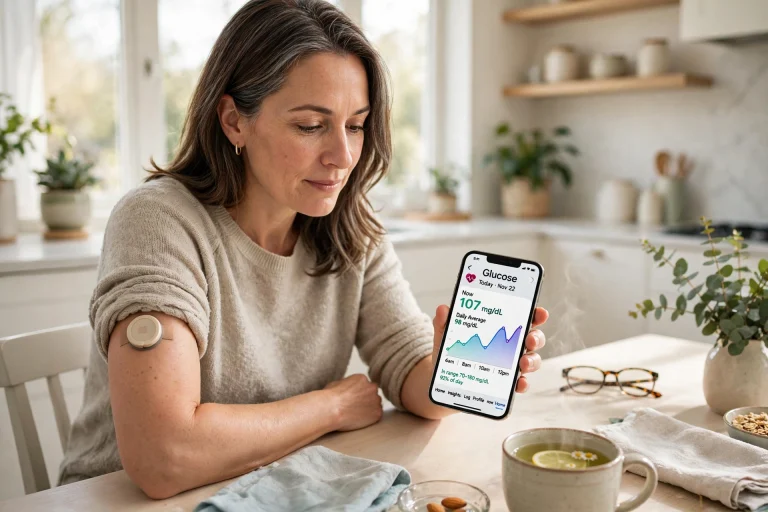
What gets measured gets managed. Seeing your own glucose responses — which meals spike you, what a walk does to the curve — changes behavior faster than any advice can. Personal feedback turns abstract guidance into concrete cause and effect.
A basic finger-stick meter gives you before-and-after snapshots around meals. A continuous glucose monitor (CGM) shows the full curve, including overnight patterns you would otherwise miss. Both are tools to discuss with your doctor or pharmacist — no brand endorsement here, because the habit of looking at your data matters more than the device.
Curious whether a sensor makes sense for you? Read our breakdown of the over-the-counter CGM options and who benefits most.
Cut Back on Alcohol
This is not prohibition — it is honesty about trade-offs. Many alcoholic drinks carry a load of empty carbs (beer, sweet cocktails, wine), and alcohol changes how the liver handles glucose: while the liver is busy processing alcohol, it releases less glucose, which can destabilize readings — sometimes low at first, sometimes rebounding high later.
Dose and pattern matter more than the occasional drink. Daily heavy drinking and sugary mixed drinks do the most damage; an occasional dry glass with food is a different story. Track your own readings to learn your pattern.
For the full picture — which drinks are worst and how alcohol interacts with diabetes medications — see our guide to diabetes and alcohol. If you take insulin or medications that can cause lows, make this a conversation with your doctor.
Consider Targeted Supplements — With Your Doctor
A few supplements have genuine trial signals as adjuncts for blood sugar support — berberine, cinnamon, and chromium are the most studied. The evidence is real but modest, and “adjunct” is the key word: these sit alongside diet, activity, sleep, and any prescribed medication, never instead of them.
Quality varies widely and interactions exist, so this is a with-your-doctor decision — especially if you take glucose-lowering medication. For a deeper evidence review, see our articles on berberine for blood sugar and the best natural blood sugar supplements.
The supplement we mention on this page, with the numbers up front
The one supplement we link to on this page is Gluco6 — a daily capsule formula made to support healthy blood sugar alongside food and lifestyle changes. It is not a cure, it does not treat or reverse diabetes, and it does not replace any medication your doctor has prescribed. The habits in this article do the heavy lifting; a supplement is only support.
What it costs (official page, checked Nov 19, 2026): 2 bottles — a 60-day supply — are $69 a bottle, $138 total. 3 bottles — a 90-day supply — are $49 a bottle, $147 total. 6 bottles — a 180-day supply — are $39 a bottle, $234 total. The 3- and 6-bottle orders ship free, and every order is a one-time payment — no subscription. Prices can change; the figure on the official page when you order is the one that counts.
It comes with a 60-day money-back guarantee. If it does nothing for you, you can ask for your money back inside 60 days.
Skip it if you take blood-sugar medication and have not talked to your doctor first — a blood-sugar supplement on top of medication can push blood sugar too low. Skip it if you are pregnant, breastfeeding, or under 18.
See Gluco6 on the official page — current price and the 60-day guarantee here
Who Gluco6 suits — and who should skip it
It suits adults with type 2 diabetes or prediabetes who already manage food and movement and want extra support alongside their doctor’s plan.
Skip it if you are expecting it to replace medication, if you are pregnant or nursing, or if your doctor says no.
Honest pros and cons
Pros: Clear bundle pricing, and bigger bundles lower the per-bottle cost; a 60-day money-back guarantee; a simple daily routine.
Cons: Not cheap; it is a supplement, not a medicine, and does not replace prescribed treatment; results vary; talk to your doctor first, especially if you take diabetes medication.
Frequently Asked Questions
How long does it take to lower A1C naturally?
Plan on a minimum of one full 3-month cycle. A1C reflects a 2–3 month average of blood sugar, so the test literally cannot show faster change — anyone promising results in days or weeks is selling something. With consistent changes, meaningful movement typically shows up at your first retest after three months of steady habits.
Can you lower A1C without medication?
In prediabetes, often yes — sustained lifestyle change is the first-line approach, and the Diabetes Prevention Program showed how powerful it can be. With type 2 diabetes, it is a with-your-doctor question: medication decisions depend on your numbers, history, and risk factors. Never stop or skip prescribed medication to try the natural route.
What’s a realistic A1C drop in 3 months?
With consistent changes across several of the methods above, a drop of 0.5–1.5 percentage points is a realistic range many people see. Individual results vary widely — starting A1C, consistency, medications, and genetics all play a role — so treat that range as a rough guide, not a guarantee.
We only recommend products we believe provide genuine value. This content is for informational purposes only and is not medical advice. Always consult your healthcare provider before making changes to your diabetes management.
3 Comments