Cinnamon for Blood Sugar: What the Research Actually Shows
Medical disclaimer: This article is educational information, not medical advice, and cinnamon is not a treatment for diabetes. If you take glucose-lowering medication, talk to your doctor before using cinnamon supplements — combining the two can push blood sugar lower than intended.
The Kitchen-Cabinet Claim vs. the Evidence
Scroll through any health feed and you will find the claim: sprinkle cinnamon on your food and your blood sugar will drop. It is an appealing idea. Cinnamon is cheap, it tastes good, and it is already sitting in most kitchen cabinets. No prescription, no pharmacy trip, no bitter pills.
Cinnamon has also been studied more seriously than most “natural blood sugar” remedies, which makes it a good test case for how this kind of claim holds up. The honest answer is more modest than the social media version. There is a real signal in the research, but it is smaller and narrower than the headlines suggest — and there is a safety catch that most of the posts making the claim never mention. This article walks through what the trials and the big evidence reviews actually found, where cinnamon might help, where it clearly does not, and what to watch out for if you use it.
First, There Are Two Kinds of Cinnamon

Most people do not realise that “cinnamon” on a supermarket shelf can be one of two different products.
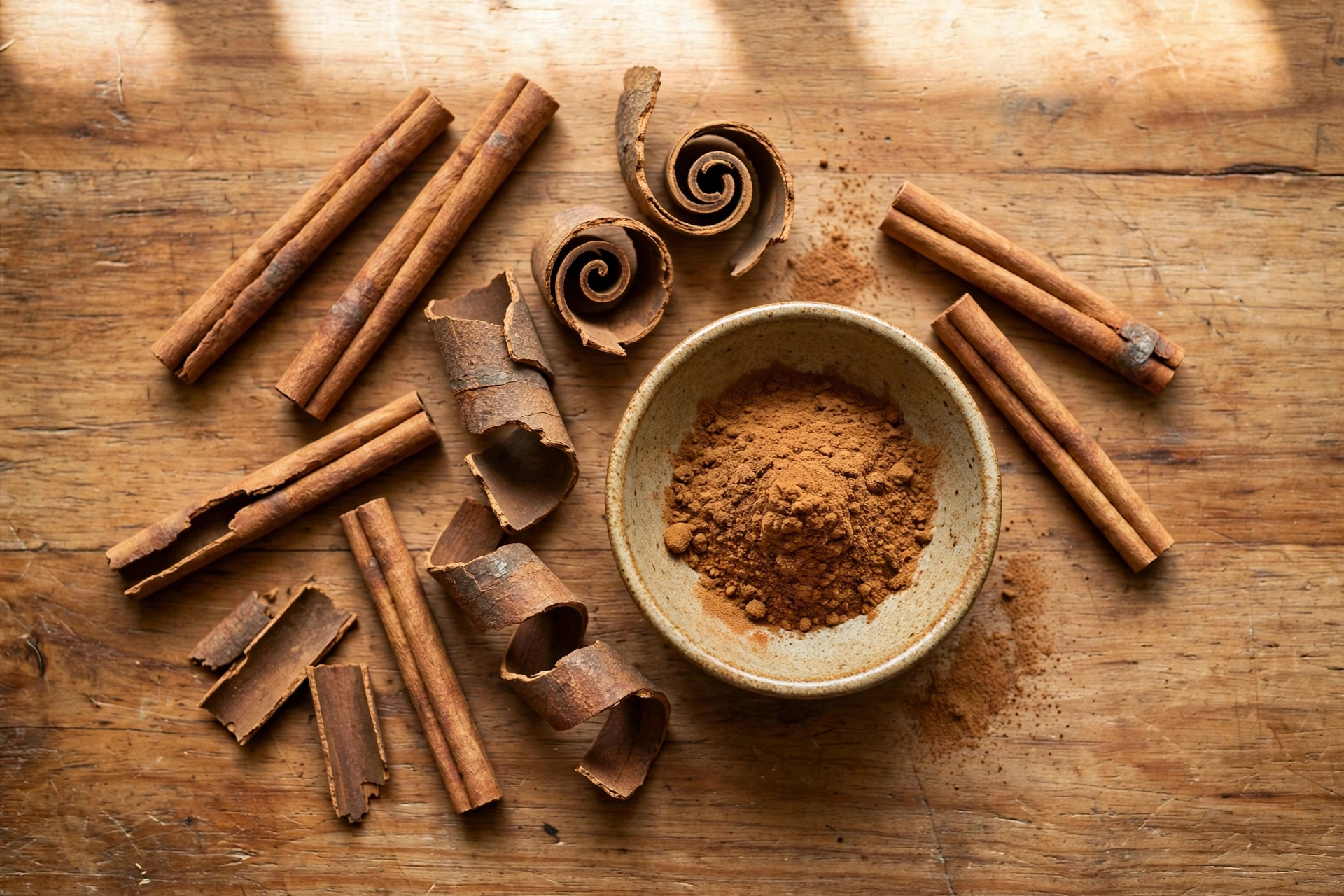
Cassia cinnamon is the common, inexpensive kind. It has the strong, sharp flavour most of us associate with cinnamon, and it is what fills most spice jars and most supplement capsules.
Ceylon cinnamon, sometimes labelled “true cinnamon,” comes from a different tree. It is milder and sweeter, usually costs more, and is harder to find in ordinary shops.
The distinction matters less for flavour than for safety. As we will see below, cassia carries far more of a natural compound called coumarin, which is the main reason health authorities urge caution with large, daily amounts of cassia. The catch is that labels often do not tell you clearly which type you are buying, and most of the blood-sugar research does not separate the two neatly either.
What the Research Actually Shows
The study that launched cinnamon’s reputation was published in Diabetes Care in 2003 by Khan and colleagues. Sixty people with type 2 diabetes took 1, 3, or 6 grams of cinnamon a day for 40 days, and fasting blood glucose fell by 18–29% across the groups taking it. Those are eye-catching numbers, and they explain why cinnamon still gets recommended today.
But a single small trial is a starting point, not a verdict. It involved a modest number of people, ran for a short time, and later, larger looks at the evidence did not fully reproduce results that strong.
The most informative check is a 2013 pooled analysis by Allen and colleagues in the Annals of Family Medicine, which combined 10 randomized controlled trials. Across those trials, cinnamon lowered fasting blood glucose by about 24.6 mg/dL on average — a genuine, if modest, effect. Yet the same analysis found no significant improvement in A1C. That gap matters. Fasting glucose is a single morning snapshot, while A1C reflects average blood sugar over roughly two to three months, and A1C is the number diabetes care is organised around. A remedy that moves the snapshot but not the average has not demonstrated the outcome that counts most.
The independent reviews are more cautious still. A Cochrane review in 2012 concluded that the evidence was insufficient to support using cinnamon for diabetes. The U.S. National Center for Complementary and Integrative Health (NCCIH), part of the National Institutes of Health, states that studies do not clearly support cinnamon for any health condition.
If you have read our guide to berberine for blood sugar, this pattern will feel familiar: an early trial with striking results, followed by pooled analyses that shrink the effect and reviews that ask for better evidence. Natural products often follow that arc, and cinnamon is not an exception.
How Cinnamon Might Work
Researchers have proposed a few mechanisms, and it is worth being clear that these are explanations being investigated, not established facts in humans. Compounds in cinnamon appear, in laboratory work, to interact with how cells respond to insulin, and cinnamon may slow the breakdown of carbohydrates during digestion, which would soften the rise in blood sugar after a meal.
That is plausible biology, and it fits the pattern of results — a nudge to fasting glucose rather than a transformation. But a plausible mechanism plus a modest average effect is very different from a proven treatment, and no mechanism claim changes what the outcome trials did or did not show.
How People Use It: Food vs. Supplements
In the kitchen, cinnamon is a flavour: on oatmeal, in coffee, over yoghurt or stewed fruit. Used that way, in ordinary culinary amounts, it is a pleasant way to make lower-sugar food taste satisfying, and for most people it raises no safety concerns.
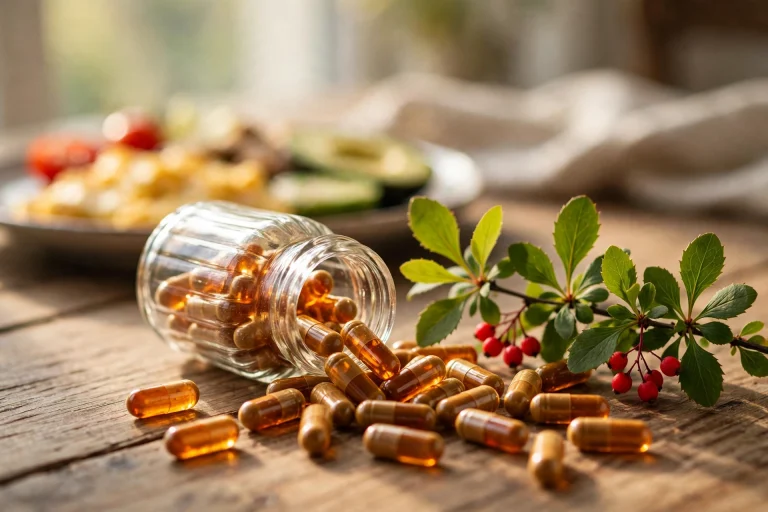
Supplements are a different proposition. Capsules and extracts concentrate what is in the bark — including the coumarin discussed below — and are taken daily in amounts well beyond seasoning. The trials behind the blood-sugar claims used measured amounts of cinnamon preparations, not a casual sprinkle, which is one reason the research results cannot simply be transferred to a spice jar, and also why supplement use deserves more care than food use.
We place cinnamon in context alongside the other commonly marketed options in our roundup of the best natural supplements for type 2 diabetes, where the same standard applies: what did pooled evidence show, and what should you watch for?
Safety: Coumarin, Your Liver, and Medication
Cinnamon’s safety issue has a name: coumarin. It occurs naturally in cassia cinnamon, and in high, sustained amounts it can stress the liver. The European Food Safety Authority (EFSA) set a tolerable daily intake for coumarin of about 0.1 mg per kilogram of body weight per day. Ceylon cinnamon, by contrast, contains only trace amounts of coumarin, which is why the type of cinnamon matters most for people using it heavily or daily in supplement form. Ordinary culinary amounts of either type are fine for most people — the concern is concentrated, long-term, high-dose cassia intake, not a teaspoon on porridge.
The second safety point is about combination. If cinnamon has even a modest glucose-lowering effect, taking it alongside glucose-lowering medication could add to the medication’s effect and push blood sugar lower than intended. That is not a reason for alarm, but it is a reason for a conversation: if you use diabetes medication and want to take cinnamon supplements, raise it with your doctor first rather than quietly stacking the two.
And a boundary that applies to every supplement on this site: cinnamon is not a substitute for prescribed medication. Stopping or reducing medication in favour of a spice is where a harmless kitchen experiment becomes a genuine risk.
The Bottom Line
Weighed honestly, cinnamon looks like this: pooled trial data shows a modest reduction in fasting blood glucose — about 24.6 mg/dL on average in the 2013 analysis — but no significant improvement in A1C, the measure that matters most. A Cochrane review found the evidence insufficient, and the NCCIH says studies do not clearly support cinnamon for any condition. It is not a treatment, and it is not a medication substitute.
Used in food, it needs no apology: it makes healthy food taste better, and that alone can support better eating habits. If you choose to try a supplement, know which type you are taking, be mindful of cassia’s coumarin, and tell your doctor — especially if you take glucose-lowering medication. For changes that reliably move A1C, the proven levers are the unglamorous ones covered in our guide on how to lower A1C naturally: food choices, activity, sleep, and medication taken as prescribed. Cinnamon can sit alongside those habits. It cannot replace them.
Frequently Asked Questions
Does cinnamon lower blood sugar?
In pooled trial data, cinnamon lowered fasting blood glucose modestly — about 24.6 mg/dL on average in a 2013 analysis of 10 randomized trials — but it did not significantly improve A1C. A Cochrane review found the evidence insufficient to support cinnamon for diabetes, so the fair summary is: a small effect on one measure, not a demonstrated effect on the one that matters most.
Which is better for blood sugar, cassia or Ceylon cinnamon?
The research does not clearly establish one type as more effective for blood sugar. The practical difference is safety: cassia contains substantially more coumarin, which can stress the liver in high, sustained amounts, while Ceylon contains only trace amounts. For daily supplement-style use, that makes Ceylon the lower-risk choice — but neither type is a proven treatment.
Can cinnamon replace metformin or other diabetes medication?
No. Nothing in the evidence supports replacing prescribed medication with cinnamon. The pooled effect is modest, A1C did not significantly improve, and major reviews consider the evidence insufficient. If you take glucose-lowering medication and add cinnamon supplements, the effects could add together — which is exactly why your doctor should know.
How much cinnamon is too much?
Culinary amounts — the sprinkle on food — are fine for most people. The concern is sustained, high intake of cassia cinnamon, because of its coumarin content: EFSA’s tolerable daily intake for coumarin is about 0.1 mg per kilogram of body weight per day. Supplement doses vary widely and are concentrated, so if you are considering daily supplement use, that is a decision to make with your doctor or pharmacist, not from a label.
Sources
- Allen RW, et al. “Cinnamon use in type 2 diabetes: an updated systematic review and meta-analysis.” Annals of Family Medicine, 2013 (pooled analysis of 10 randomized controlled trials).
- Leach MJ, Kumar S. “Cinnamon for diabetes mellitus.” Cochrane Database of Systematic Reviews, 2012.
- National Center for Complementary and Integrative Health (NCCIH), National Institutes of Health: “Cinnamon” — evidence summary.
- Khan A, et al. “Cinnamon improves glucose and lipids of people with type 2 diabetes.” Diabetes Care, 2003.
- European Food Safety Authority (EFSA): coumarin tolerable daily intake assessment.
Diabetes Holistic Fix is an informational website. Nothing here is medical advice, and no supplement reviewed or discussed on this site is a substitute for care from your own clinician.