
Stelo vs Lingo: Which No-Prescription Glucose Monitor Fits Type 2 Diabetes?
By Tahir
This article is for general information only and is not medical advice. A glucose monitor does not replace your doctor, your medication, or fingerstick checks when your care team asks for them. Prices below were checked in October 2026 and can change.
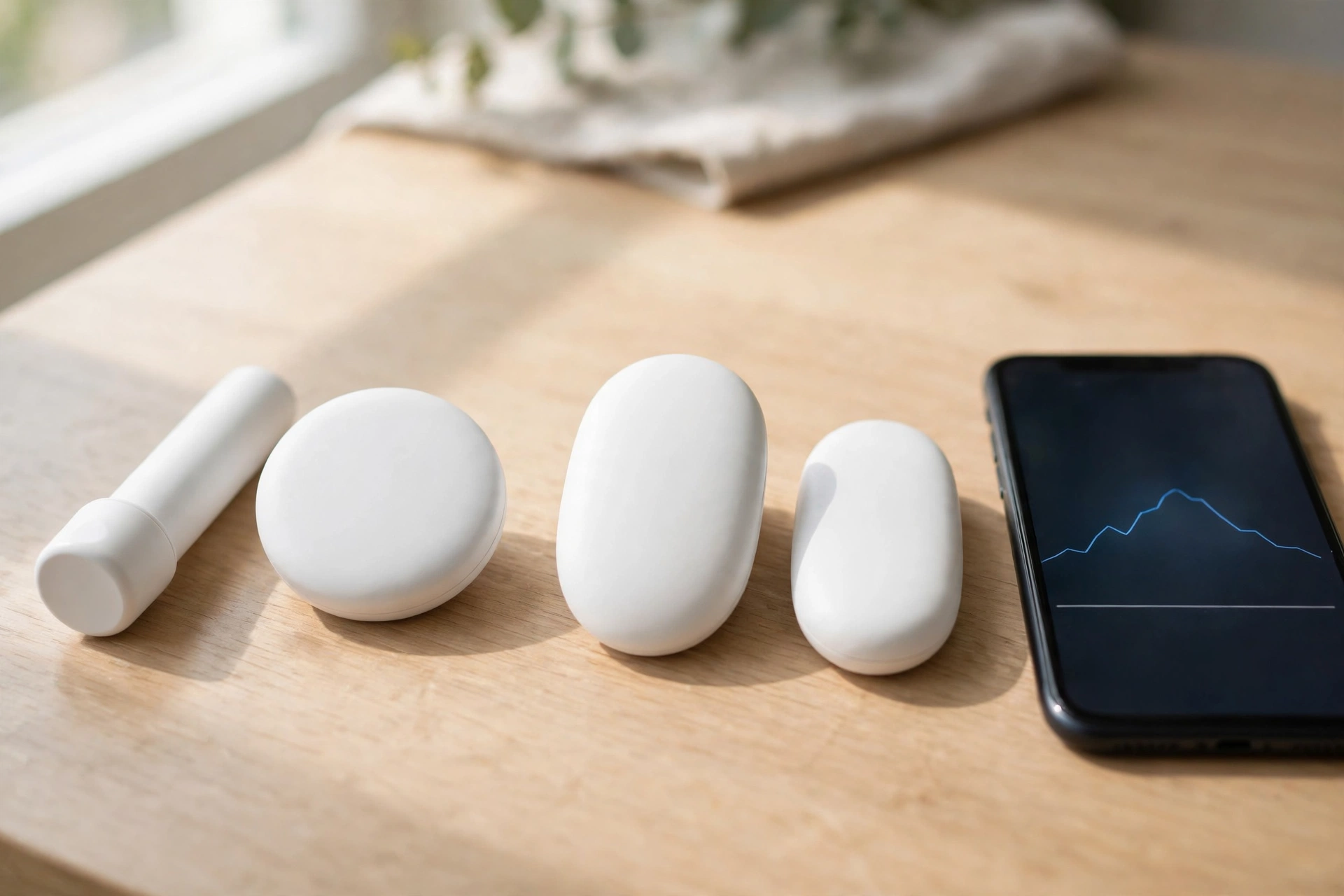
Two glucose monitors now sit on store shelves with no prescription needed: Stelo by Dexcom and Lingo by Abbott. They look like twins. They are not. For a person with type 2 diabetes, one real difference matters more than everything else on the box — and it is not the price.
The short answer
Stelo was cleared by the FDA specifically with people like you in mind: adults with diabetes who do not use insulin, including people treating it with oral medication. Lingo was cleared as a general wellness device. Abbott itself says Lingo is not intended to diagnose any condition, including diabetes.
If your goal is understanding your blood sugar as part of managing type 2 diabetes, Stelo is the one built and cleared for that job. If your goal is general habit coaching and you do not carry a diabetes diagnosis, Lingo’s app coaching is genuinely good. Details below, because the small print decides this one.
Side by side
| Stelo (Dexcom) | Lingo (Abbott) | |
|---|---|---|
| FDA clearance | First OTC CGM ever cleared (March 2024), for adults 18+ not on insulin, including diabetes on oral meds | Cleared 2024 for adults 18+ not on insulin, as a wellness device — not for diabetes management |
| Sensor wear | Up to 15 days (plus a 12-hour grace period) | Up to 14 days |
| Warm-up | About 30 minutes | About 30–60 minutes |
| New readings | Sensor measures every 5 minutes; app graph updates every 15 minutes | Every 1 minute, in real time |
| Numbers the app shows | 70–250 mg/dL (full data also in Dexcom Clarity) | 55–200 mg/dL |
| Alarms for highs/lows | No | No |
| Coaching | Spike notifications, weekly spike report, food log with photos, share data with your clinician through Clarity | “Lingo Count” daily score, personal targets, challenges, weekly reports |
| Water | Waterproof — up to 8 feet for 24 hours | Water resistant — about 3 feet for 30 minutes (shower fine) |
| Price (Oct 2026) | 2 sensors $99 one-time; subscription $89/month; 3-month plan $252 | 1 sensor $54; 2 sensors $89; 12-week plan $249 |
| Returns | Sales are final on Dexcom’s store | 30-day money-back guarantee on first purchase |
| HSA/FSA | Eligible | Eligible |
The difference nobody puts in the ads: the ceiling
Lingo’s app stops displaying at 200 mg/dL. Stelo displays up to 250 mg/dL.
Why should you care? Because the readings a person with type 2 diabetes most needs to see are the post-meal spikes — and those are exactly the readings that run past 200. A breakfast that sends you to 230 will show on Stelo. On Lingo, the top of the spike is simply not displayed. For learning what food does to your sugar, that ceiling is a real limit, not a footnote.
The thing neither one does: alarms
Neither Stelo nor Lingo will beep, buzz, or warn you about a high or a low. That is not a defect — leaving alarms out is precisely what allowed both to be sold without a prescription to people not on insulin.
So be clear-eyed: if you use insulin, or you are at risk of dangerous lows, neither of these replaces a prescription CGM with alarms. Talk to your care team about the real thing. These two are learning tools, not safety nets.
What each app is like to live with
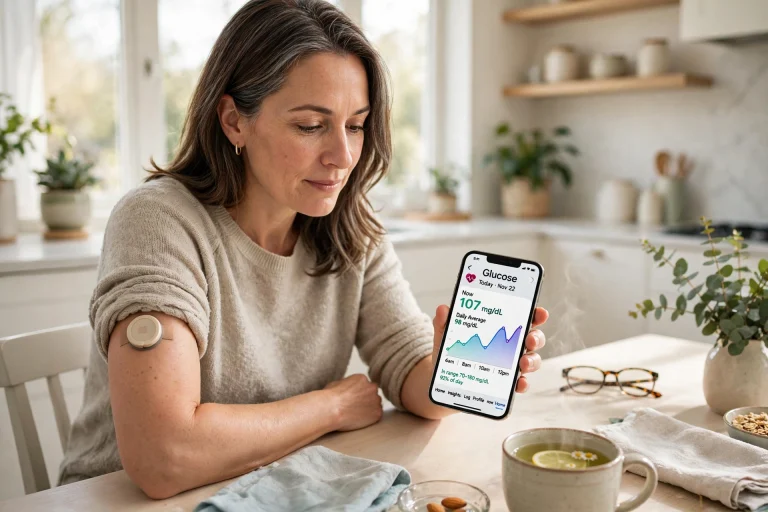
Stelo feels like a medical device that learned some manners. You get spike notifications (they can arrive a while after the spike, so think “report,” not “alarm”), a weekly spike report, pattern insights, and a food log that works from photos. Your data can flow into Dexcom Clarity, which means your clinician can actually see it — a quiet advantage if your doctor is data-friendly. It also works with Apple Watch and syncs with Apple Health and Google Health Connect. In Dexcom’s own study, about 78% of sensors lasted the full 15 days.
Lingo feels like a coach that happens to read glucose. Its “Lingo Count” turns every spike into one simple daily score with a personal target, then nudges your habits with challenges and weekly progress reports. Readings stream every minute, which makes the cause-and-effect of a meal feel immediate. About 77% of sensors lasted the full 14 days in Abbott’s study, and failed sensors are replaced free under its sensor promise.
What it costs, honestly
On subscription, the two land within pennies of each other — roughly $3 a day either way. The differences are at the edges:
- Cheapest way to just try one: Lingo’s single sensor at $54, with a 30-day money-back guarantee on a first purchase. That is the lowest-risk first step of the two.
- Cheapest per sensor over time: Lingo’s 12-week plan ($249 for 6 sensors).
- Stelo’s catch: purchases on Dexcom’s own store are final — no returns. Buy the 2-sensor pack first if you are unsure, not the 3-month plan.
Both are HSA/FSA eligible, and both include the applicator, sensor, overpatches, and the app in the box.
Who should pick which
Pick Stelo if you have type 2 diabetes (or prediabetes with your doctor’s blessing), you are not on insulin, and your main question is “what is food doing to my blood sugar?” It is cleared for that purpose, shows the spikes that matter, and can share data with your clinician.
Pick Lingo if you do not have diabetes, your sugars rarely leave the normal range, and what you really want is a habit coach with a glucose score to chase. Just know its clearance does not cover diabetes management, and its 200 ceiling hides high readings.
Skip both and talk to your doctor if you use insulin, you have had serious lows, or you need alarms. A prescription CGM is the right tool for that job.
New to the whole idea of wearing a glucose sensor without a prescription? Start with our guide to over-the-counter CGMs and who actually needs one — then come back and pick your side.
If you still use fingersticks some days, our guide to the best time to check blood sugar shows how to test in pairs instead of at random.
Sources
- FDA press announcement on the first OTC CGM clearance (Stelo), March 2024 — wording of cleared use.
- Dexcom Stelo official store and product pages (wear time, display range, pricing, water rating), checked October 2026.
- Abbott Lingo official site and support pages (wear time, display range, pricing, water resistance, money-back terms), checked October 2026.
- ADA Consumer Guide product listings for OTC CGM specifications and accuracy (Stelo MARD 8.3%).

One Comment