Best Time to Check Blood Sugar: Test in Pairs, Not at Random
Short answer: The most useful time to check your blood sugar is in pairs — once right before a meal, and again 2 hours after the first bite. The pair tells you exactly what that meal did to you. A single random reading, on its own, tells you almost nothing. Add a morning fasting check now and then, and you have a clear picture without testing all day long.

This article is educational information, not medical advice. Your doctor may set different targets and a different schedule for you — theirs wins.
Why One Reading Is Not Enough
A blood sugar number by itself is a snapshot. It shows where you are, but not how you got there or where you are heading.
Say you check at 3 p.m. and see 165. Is that good or bad? Honestly, you can’t tell. Maybe you ate lunch an hour ago and you are on your way down. Maybe you have been climbing all afternoon. The number alone has no story.
Now compare a pair. You check before lunch: 110. You check 2 hours after the first bite: 165. That pair has a story. Lunch raised you by about 55 points. Next time you eat that same lunch, you know what to expect — and you can change one thing and see if the pair improves.
That is the whole idea of this article. Test less randomly. Test in pairs. Learn from each pair.
The Morning Fasting Check
The fasting check is the one reading most people already know. You take it first thing in the morning, before food, coffee, or anything else.
This reading shows what your liver did overnight. While you sleep, your liver releases stored sugar into your blood to keep you going. If that release is strong, your morning number runs high even though you ate nothing.
If your mornings keep surprising you, we explain the reason in our guide to the dawn phenomenon — and why it is not your fault.
The fasting check is a good anchor reading. But on its own, it only covers the overnight hours. It says nothing about your meals, and meals are where most of the day’s action happens.
The Pair: Before a Meal and 2 Hours After
Here is the core habit. Pick a meal. Check right before you eat. Eat normally. Set a timer from the first bite. Check again at the 2-hour mark.
Why 2 hours? That is roughly when a meal’s effect peaks and starts settling. Checking at 30 minutes catches the climb and can scare you for no reason. Checking at 4 hours misses the story. Two hours is the standard checkpoint doctors use, too.
What the numbers should look like
The American Diabetes Association (ADA) gives general target ranges for most adults with diabetes:
| When you check | General ADA target |
|---|---|
| Before a meal | 80–130 mg/dL |
| 2 hours after starting a meal | Less than 180 mg/dL |
Read that table with care. These are general targets for most adults. They are not personal orders. Your doctor may set your range higher or lower based on your age, your medicines, and your health. If your doctor gave you different numbers, your doctor’s numbers are the ones that count.
If you are not sure what a reading means in the bigger picture, our guide to prediabetes blood sugar levels lays out the normal, prediabetes, and diabetes ranges side by side.
And if an after-meal reading comes back higher than you would like, do not just stare at it. A short, easy walk is one of the simplest responses there is — we cover why in walking after meals for blood sugar.
A Simple Weekly Schedule (No Insulin)
Many people with type 2 diabetes are told to “check your sugar” with no real plan. Then they either test ten times a day for a week and burn out, or they stop testing at all.
If you are not on insulin, you usually do not need to test all day, every day. A rotating pattern of pairs works better:
- Monday: breakfast pair (before, and 2 hours after)
- Wednesday: dinner pair
- Friday: lunch pair
- Now and then: a morning fasting check on a day you feel rested and normal
Each pair tests a different meal. By the end of the week, you have learned something real about three different meals — for the cost of six strips. Over a month, patterns show up. You start to see which meals are fine and which ones need a smaller portion, a different side dish, or a walk after.
That is structured testing. It respects your fingers, your strips, and your patience.
Other Times Worth Checking
Pairs cover your routine. A few extra moments are worth a check too:
- At bedtime. Especially if dinner was late, unusual, or smaller than normal. You learn where your night is starting. That bedtime check matters even more after a drink. Alcohol can cause a delayed drop overnight, so see our guide to diabetes and alcohol for safe drinking.
- Before driving or exercise, if you take insulin or a sulfonylurea. These medicines can push blood sugar low. A quick check before you get behind the wheel or start a workout is a safety check, not a routine one.
- When you feel a low coming on. Shaky, sweaty, racing heart, sudden hunger, or feeling confused — check right away. A low needs fast treatment, and the number tells you if that is really what is happening.
- When you are sick. Illness can push blood sugar up even when you are barely eating. Checking more often while sick helps you and your doctor spot trouble early.
How Many Checks Are Enough?
Here is the honest part: more data is not better data.
A month of random checks gives you a drawer full of numbers and no answers. One week of careful pairs gives you a short list of lessons you can act on.
So the goal is not a big number of tests. The goal is tests that answer a question. Before each check, it helps to know what you are asking. “What did this meal do?” is a good question. “I felt shaky — am I low?” is a good question. “It is 3 p.m. and I am curious” is not a bad question, but it is not worth many strips.
Test with a purpose, write the pair down with what you ate, and review the pairs once a week. That weekly review is where the learning happens. Keep each pair in one place with this free printable blood sugar log.
When Fingersticks Feel Like a Chore: The CGM Fork
For some people, the routine above still does not stick. Life gets busy. Strips run out. The pattern never gets clear because the checks keep getting skipped.
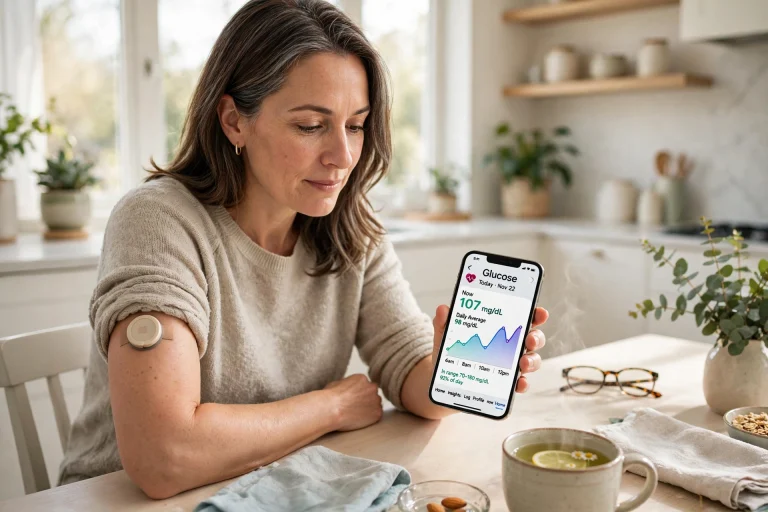
That is where a continuous glucose monitor — a CGM — comes in. A CGM is a small sensor you wear on your arm. Instead of snapshots, it reads your sugar around the clock and draws the whole curve: the overnight climb, the breakfast spike, the walk that brought it down. You see trends, not just moments.
Honest notes, because they matter:
- A CGM shows patterns across the whole day, which is exactly what paired testing tries to do by hand.
- Over-the-counter options now exist for adults with type 2 diabetes who are not on insulin — no prescription needed for those models.
- A CGM does not replace your doctor’s plan, and it costs more than strips. It is a tool for seeing clearly, not a treatment by itself.
If that sounds like the missing piece, start with our plain-language guide to over-the-counter CGMs and who needs one. If you are closer to choosing, our Stelo vs Lingo comparison walks through the two main no-prescription options side by side.
Some people test in pairs for a month and learn everything they need. Others need the full picture a CGM draws. Both are fine. The goal is the same: readings that teach you something.
The Bottom Line
The best time to check your blood sugar is not “as often as possible.” It is at the moments that answer a question.
Test before a meal and 2 hours after the first bite, and the pair tells you what that meal did. Add a morning fasting check for the overnight story. Rotate the pairs across the week if you are not on insulin, and add extra checks at bedtime, before driving or exercise on low-risk medicines, when you feel a low, and when you are sick.
Compare your numbers to the general ADA targets — 80–130 mg/dL before meals, under 180 mg/dL two hours after — and remember your doctor’s targets come first.
And if the fingerstick routine keeps falling apart, a CGM can watch the pattern for you. Either way, you are not collecting numbers anymore. You are collecting answers.
Quick FAQs
How many times a day should a person with type 2 diabetes check?
There is no single number. If you are not on insulin, a few planned pairs across the week often teach more than daily random checks. If you take insulin, your doctor will likely want more frequent checks, including before meals and at bedtime. Your doctor’s plan decides.
If I only do one check, is the morning fasting check the best one?
It is the most common single check, and it does show your overnight pattern. But it misses your meals completely. If you can add just one more, make it a 2-hour after-meal check — that pair is where the real learning is.
Do I need to test if I am not on insulin or medicines that cause lows?
You may not need to test every day, and some people manage well with occasional structured pairs plus regular A1C tests. Testing is most useful during a learning stretch — a new food routine, a medicine change, or a few weeks of gathering patterns. Ask your doctor what schedule fits your situation.
Can I stop fingersticks if I wear a CGM?
Mostly, yes — that is the point of the sensor. But keep your meter. You will still want a fingerstick to confirm a reading that does not match how you feel, and as a backup if the sensor fails or falls off.