Walking After Meals for Blood Sugar: The 10-Minute Habit That Actually Works
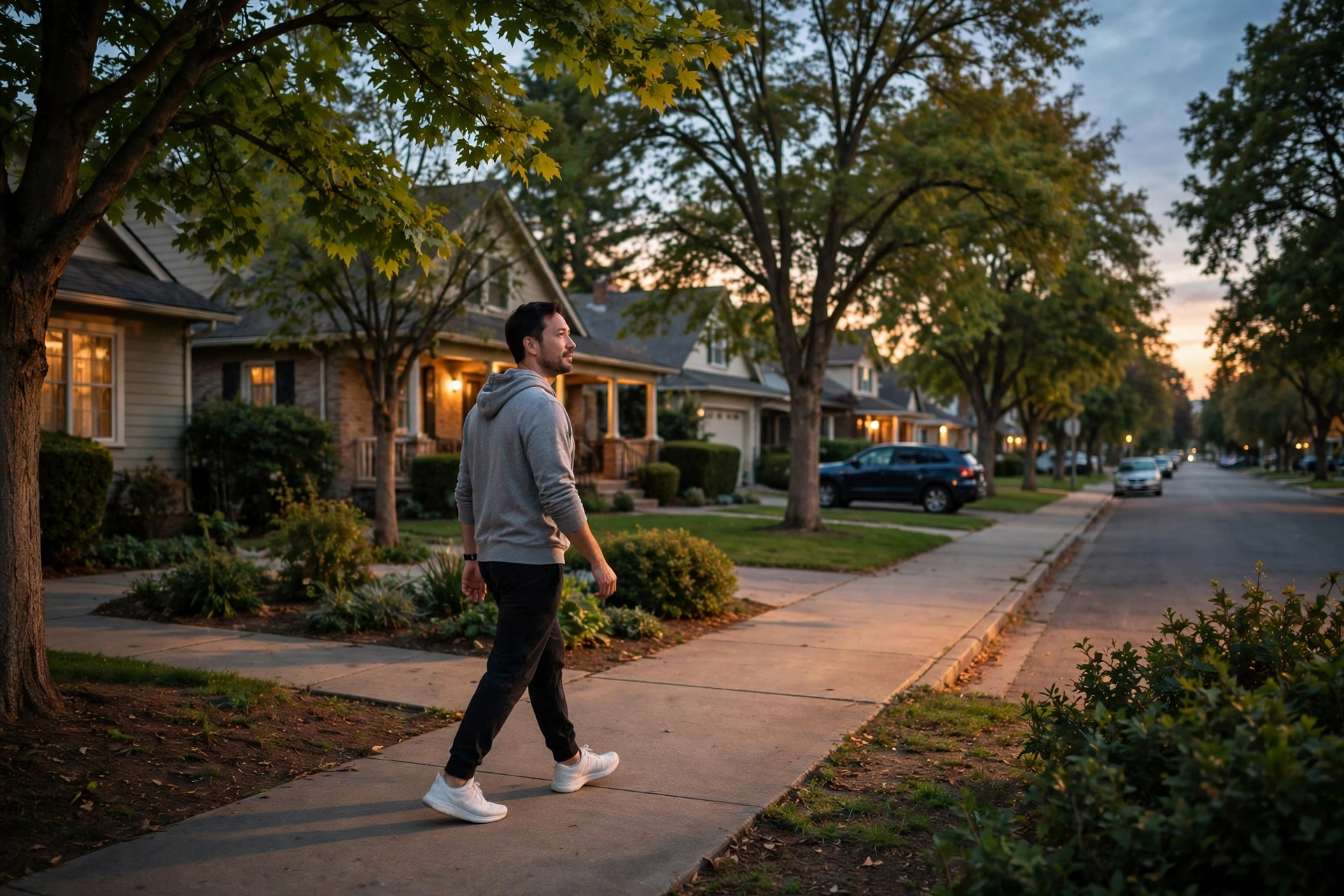
Short answer: One of the simplest, best-supported habits in diabetes care is a short, easy walk after you eat. Studies in people with type 2 diabetes found that walking just 10 minutes after each meal blunted the post-meal blood sugar spike better than one longer walk at a random time of day — because the walk lands exactly when your glucose is rising. It costs nothing, needs no equipment, and fits after breakfast, lunch, or dinner.
Educational information only, not medical advice. If you use insulin or a sulfonylurea, ask your doctor about post-meal walks — activity after eating can add to your medication’s effect, and you’ll want a plan for lows.
Why Timing Is the Whole Trick
After a meal, your blood sugar climbs for roughly 30–90 minutes before it settles. Working muscles pull glucose straight out of the bloodstream to fuel themselves — that’s true at any hour. But a walk taken during the rise catches the spike at its highest point and trims the peak itself, instead of just burning calories later.
That’s what the research keeps showing:
- In a study of adults with type 2 diabetes (published in Diabetologia, 2016), walking 10 minutes after each main meal lowered post-meal glucose by about 12% overall compared with a single daily 30-minute walk — and by about 22% after the evening meal, usually the heaviest and most carb-rich.
- An earlier study in Diabetes Care (2013) found that three short 15-minute post-meal walks improved overall 24-hour glucose control more than one 45-minute walk taken at another time.
Same total walking. Better results. The ingredient wasn’t effort — it was timing.
How to Do It
- When: Start within about 30 minutes of finishing your meal. After dinner matters most for most people.
- How long: 10–15 minutes is the studied dose. If you’re starting from very little movement, begin with 5 and add a minute every few days.
- How fast: Easy, conversational pace — you should be able to chat while you walk. This is not cardio training; it’s spike control. A stroll counts.
- Where: Around the block, around the house, a treadmill, a mall — flat and familiar beats scenic and steep while you’re building the habit.
Set a small anchor so it sticks: clear the table, lace up, walk. The men and women who succeed with this habit don’t rely on motivation — they bolt the walk onto a meal that already happens three times a day.
What to Watch For
- On insulin or a sulfonylurea? Carry fast-acting glucose (tablets or juice) on your walks, especially in the first weeks, and check your readings after the walk a few times to learn your own pattern. Post-meal activity plus medication can occasionally overshoot.
- Foot health matters. Comfortable, closed shoes; check your feet regularly, as with any new walking routine.
- Weather and safety: icy sidewalks and 105° afternoons are real. Walk indoors, walk the hallway, split it into two 5-minute loops — the glucose benefit doesn’t care about the scenery.
Where This Fits in Your Bigger Plan
Post-meal walking is a tactic, and a good one — but it works best stacked on the fundamentals: an eating pattern you can hold, regular overall activity, sleep, and medication as prescribed. It’s the natural first step before (or alongside) structured exercise like the routines in our guide to the best exercises for diabetics to lower blood sugar at home, and it’s one of the easiest daily wins inside the bigger picture of how to lower A1C naturally. If your hardest number is the morning fasting reading, an after-dinner walk is still relevant — evening activity feeds into overnight control, which is the territory of the dawn phenomenon.
The Verdict
Few diabetes habits are this well-matched: genuinely studied, completely free, gentle enough for almost anyone, and aimed at the exact moment your blood sugar needs the help. Ten minutes after meals. Start with dinner tonight — that’s the meal where the research says it helps the most.
Quick FAQs
How soon after eating should I walk? Within about 30 minutes of finishing is the studied window — soon enough to meet the glucose rise on its way up.
Is 10 minutes really enough? In the type 2 diabetes study, yes — 10 minutes after each meal outperformed a single 30-minute walk for post-meal control. More walking is still good for you; it’s just not required for this effect.
What if I can only manage one walk a day? Make it the after-dinner one. It showed the largest benefit in the research and helps set up your overnight numbers.